Publishers emuh ruh of Glacier Bay Books and Zachary Clemente of Bulgilhan Press sat down to interview each other about publishing – what inspires them, what challenges they face, and what keeps them going.
Check out both of their ongoing Kickstarter campaigns:
Presenting five incredible new books from Glacier Bay, ranging from political works & dramas to new collections from alt-manga stars.
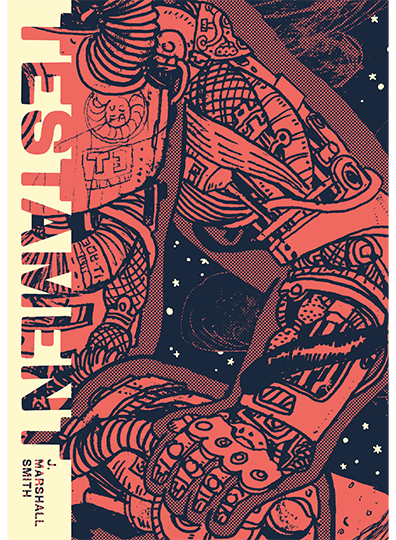
We’re back with two spectacular limited palette books: Testament by J. Marshall Smith and the reprint of Faster by Jesse Lonergan!
BP: Do you mind if I kick off the first questions and we go from there?
GBB: Yeah no worries, I figure it can be a back-and-forth question-and-answer thing, we can also devolve into just talking about stuff.
BP: [laughs] Yeah, you’re probably right.
The first question that I think you and I get asked a lot is how do we get started publishing. What brought you to it and why manga specifically?
GB: So, when Glacier Bay started, I didn’t really have a formal publishing plan. It’s not like “I’m going to start a publisher and we’re going to do XYZ things…” It was more like I was reading a bunch of interesting authors at that time, a lot of them coming from the alternative and small press manga world.
This was around 2018 when this started happening, because we had our first book come out in 2019. I don’t want to say too much detail but I was in the middle of transitioning away from one of my jobs so I had a little time while I was figuring out what I wanted to do after that.
BP: I definitely feel that because 2018 was the time I announced I wanted to start publishing and I was in a transitional time too. I changed jobs to a much more creative one that really inspired me to try something new out.
GBB: Yeah, I was thinking it would be cool to make a book with some of these artists that won’t ever really be published because they’re too small or indie or that the routes for larger publishing, let’s say, is either mainstream stuff that’s recent or alternative stuff that’s really old.
BP: Yeah, alternative stuff that’s foundational enough now to just be part of the manga canon. It’s gotta be in English now.
GBB: Yeah, and at the time I was reading some stuff by Moriizumi Takehito, panpanya, nerunodaisuke, Natsujikei Miyazaki…there were a bunch of people. I was reading Saika who was occasionally posting their short comics online.
BP: That leads into my next question actually. I feel like I’m pretty plugged into manga but as I got more familiar with your catalog I realized I don’t know who any of these artists are and couldn’t imagine how anyone would find them except for esoteric forums or something like that. I have no understanding of it and in some ways you are kind of my conduit to a whole world I knew existed but had no idea where to find it.
GBB: Where do we find artists and stuff like that? Honestly it’s all over the place. Some of them are online through social media or they’ve published books on their own or with a small publisher in Japan. There’re a lot of artists who were or are active at Comitia or other small press events. So I’d see their stuff from there or when they would be carried by alternative bookstores or manga shops. There was also stuff that occasionally would trickle over.
Way back in 2016 or 2017 there used to be this alternative manga magazine called DIORAMA, really just the project of one editor, which got turned into a series called USCA which had one English edition.
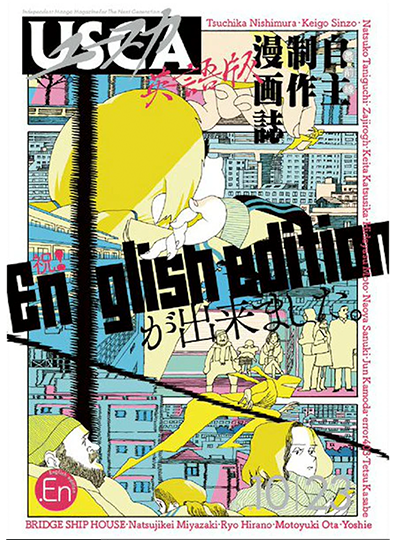
BP: I had that one! I don’t know why or how but I know I had a copy of that one. I think that was my only eye opener to be like “oh shit, this is real!”
GBB: Oh yeah.
BP: Of course there would be this, but it was my first opportunity to really jump into it.
GBB: In Japan, there were five of them but they did one English compilation but now the editor has moved on and I think is doing design work for something else so he’s very busy. Life moves on, that kind of thing.
But yeah, there were a lot of cool artists that came out through that, and small press publications like it.
BP: Are you at the point now where you sometimes get artists you would be interested in publishing reaching out to you?
GBB: I occasionally have artists reach out to me, it’s pretty hit and miss. Sometimes I don’t think that it really matches us and to me it doesn’t really seem like something we would want to publish but we’ve started to get a couple inquiries for stuff that I don’t know if it would be the best fit for us to publish but it actually is kind of interesting work. I’m not always able to reply but in those cases if I can I try to ping them to let them know they should shop it around to other publishers or consider self-publishing.
There’s a degree of work where it’s interesting, but I’m not necessarily in the sense of wanting to publish it.
BP: It’s interesting, I feel like you and I have very similar experiences except in very different proportions because you are mostly finding artists from communities you don’t personally belong to whereas I’m pretty exclusively pulling from the communities I’m a part of and that people who I know so the great majority of the books that come my way…
GBB: Come from a personal relation?
BP: Something like that, but more like from artists who are well aware of what Bulgilhan does or are interested because they’re fans of my artists or admire the books in some way. It’s very lovely but it means I have to be very judicious… [laughs]
I think a lot of artists are comfortable with rejection but it can be challenging sometimes to say “I appreciate that you like the books I publish a lot but I might not be the right publisher for you.” That happens fairly often.
GBB: I will say it’s gotten a little bit better recently. Most of the time I get inquiries, it’s probably not a great fit. I mean I don’t really have the bandwidth anyhow so I don’t even have submissions but I still get emails.
BP: Someone’s shooting their shot, just in case.
GBB: Exactly, I can’t really stop them from sending an email. Feel free.
BP: [laughs]
GBB: But I did get an email from another publisher who I’ve worked on some stuff with and they got contacted by an editor they work with about a book from a book from an artist that they work with saying “maybe they’d be a good fit”. It’s actually a book by a Portuguese artist who I didn’t know much about beforehand. I was looking through it – I wasn’t really reading it because I can’t read Portuguese – but garning it the best I could and it was actually really cool.
Sometimes this works really well! It wasn’t a formal submission but it kind of was…
BP: It’s funny, I want to reopen submissions one day. Right now they’re closed for my own mental capacity. I think we’ve talked about it before but earlier this year I was really struggling to keep up my energy and it felt like the walls were kinda closing in on me to stop me from doing the things I want to do with my life. I decided to have a minor reformation of the press and that resulted in me closing submissions.
Part of that was because I was sitting on like 50 submissions that I hadn’t responded to yet and I had this commitment from 2018 when I launched to respond to every submission I have some appreciation of. Sure there were some I didn’t respond to.
GBB: Oh, yeah.
BP: But there were a large number I kept meaning to give feedback to and finally I realized that I just need to tell all these people who’ve been waiting for months to hear back from me that “it’s not happening, I’m sorry.” I gave them a bit of context and then closed my submissions.
I do really want to get back to them because I don’t want to get too stagnant. I feel like I’m pulling from the ocean I’m swimming in. I want to be aware of the curve. I feel like you’re delivering upon us an entirely different ecosystem which is so cool.
GBB: I think about this too. Before I was publishing the way I’m doing now, I was reading a lot of stuff and exploring a lot of stuff…
[Both laugh]
GBB: I don’t have time! I try, bit by bit, but my capacity to do anything is really consumed by just trying to keep things running. It’s tough.
BP: Yup yup, especially during a Kickstarter.
GBB: Yeah, yeah exactly.
BP: Kind of a pivot but as I was refamiliarizing myself with your catalog, I ended up being curious as to what your definition of manga is. I have a fairly strict definition but I think yours would carry more weight.
GBB: This is something I thought about a while ago because if you go back a couple years people were talking about what is or is not manga. It feels like it was a conversation that was happening. I guess I’ll start off…and I’m not trying to be rude or anything but I don’t think that it’s a useful discussion.
BP: [guffaws] I love that, I love that!
GBB: But I do think that if you have to define it, the easiest way would be to say it’s comics from Japan.
BP: And that’s essentially my definition.
GBB: But then you start asking “what does comics from Japan mean?” Is it comics published in Japan? Because a lot of the authors I publish weren’t published in Japan.
BP: Right.
GBB: And I think for a lot of mainstream readers, it’s not whether it’s published in Japan, it’s whether it feels like manga…
BP: I think this is good because I care too much about it but I feel like it’s probably pretty healthy to not care too much – it’s definitely smart as someone who has the “manga” moniker attached to your publisher.
GBB: [chuckes] Yes.
BP: For me, I think I get frustrated when I see people not want to use the word “comics” when they are making comics.
GBB: Oh, yeah yeah yeah.
BP: Like when American cartoonists, cartoonists from Europe, cartoonists from South America – wherever – say “oh, I’m a manga artist.” You’re not. It’s okay. You’re a comics artist and that’s wonderful! Congratulations! It’s a beautiful, beautiful tradition. I don’t think comics artists should parlay their work as manga, even if they’re inspired by it. When I’m feeling punchy, I reference Filipe Smith who published his series Peepo Choo in Japan. No one else has made Peepo Choo and they’re never going to.
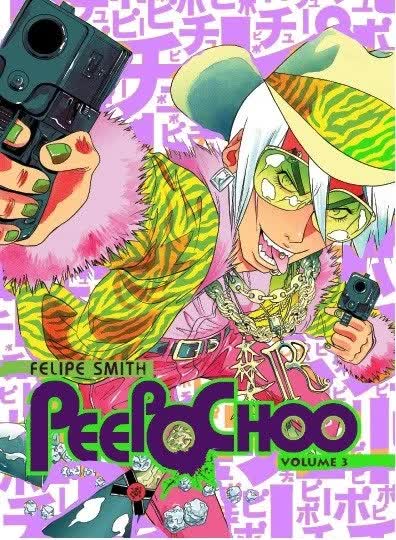
BP: But…I feel like I need to be more challenged on this because I know it really doesn’t matter.
What I am bothered by is a reader not given the opportunity to dive into the grand tradition of manga publishing through a variety of channels – mainstream, indie, or even underground because there’s an obfuscation of what’s manga is if something that feels like mainstream manga gets categorized or placed on bookstore shelves alongside manga from Japan. It makes it harder to determine what’s coming from a really interesting cultural and geographical place, publishing-wise.
GB: It’s interesting, there was this thing, I think it was called “Global Manga” – people were trying to come up with a term for that whole range of heavily manga influenced comics, the first generation influence of that effect…
BP: I don’t know what to call that other than comics.
[both laugh]
GBB: I feel like this is an instance where people cling to labels a little too much…readers, I’m not talking about you…
BP: It’s fair! I definitely do it too.
GBB: I feel like for manga readers, manga is the product that manga readers will read. It’s kinda like…
BP: It’s self-fulfilling.
GBB: Yeah, so from my perspective, that definition of manga is relatively limited and mainstream. I kind of think that the really important thing, like you said a moment ago, is to broaden people’s understanding of and exposure to what manga is. Make it more available to introduce all these different currents and streams of creation, of manga that has come about.
But yeah take a look at Hana [Chatani]’s work (Give Her Back to Me, Glacier Bay Books) where they’re from New Zealand and Japan and they self-published it so from a strict definitional standpoint, it’s kind of ambiguous.
BP: I feel you, I had to think about that with Huahua [Zhu] (The King’s Warrior, Bulgilhan Press). She has a lot of styles available to her – the comics I’ve seen of hers are very amorphous, but for King’s Warrior she went for a heavily manga-influenced style which I loved. But I was really careful when I was talking about it, to describe it as “inspired” by things like Berserk. I really didn’t want to present it as a manga.
GBB: I feel like as a topic, it’s been buoyed away with time, but it can create a lot of…passionate discussion.
BP: [laughs] That’s a great way to describe it.
GBB: Important to navigate carefully, for sure.
But yeah, I publish Ding Pao-Yen, the Taiwanese artist and sure that’s not “manga”, he is incredibly influenced by manga. There are these interviews where he talks about the different manga he’s inspired by. He does fine art and comics that are very manga influenced. So, I don’t know that I present it as manga to people but this is clearly something that’s going to be interest to manga readers.
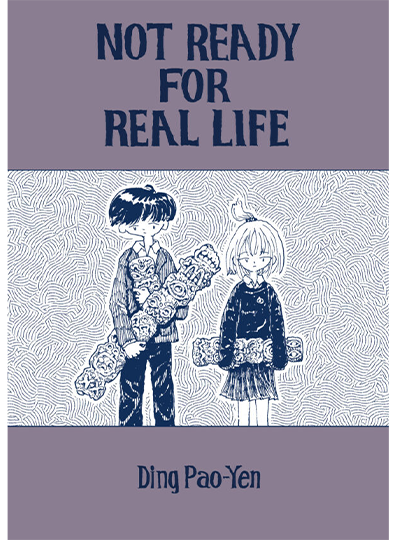
BP: Oh sure, absolutely. That’s really interesting because you as Glacier Bay Books have cultivated such a really interesting catalog of stories which, and I’m turning on myself now, all feel very “spiritually” manga. Every book you’ve published that I’ve read, I feel like I’ve read a manga volume.
GBB: I think a lot of it because the titles are very curated, in terms of what we pick, so even when we’re picking stuff that’s not following a manga lineage by being published in Japan…
There was a French author I wanted to publish a book by – someone else is publishing it – someone I’ve been following for years but…even though that book is not really manga influenced, I think it would be something that would appeal to people who read manga and people who read slightly more alternative comics.
BP: Yeah, I feel like if you’re trying to get a French cartoonist, you’re muscling in on Peow[2]’s turf.
[both laugh]
BP: You’re talking about European comics that feel like manga…
GBB: I wonder if this is someone on Peow[2]’s radar, I’m not sure actually.
BP: I wouldn’t be surprised, Pat – and previously Elliot and Olle – their curatorial eye is really distinct in a way I’m really impressed by.
GBB: Yeah, oh yeah.
Something I was wondering about was, now correct me if I’m wrong, you were involved with organizing MICE and now you’re working with the Boston Comic Arts Foundation, but way back when you also used to make comics, right?
BP: Yeah.
[both laugh]
GBB: Sorry to dredge it up.
BP: Oh no, I’m actually quite proud of what I did!
GBB: Oh okay, good good good. Now that you’re publishing comics, does that work ever revive that creative itch for you as a creator? Are you ever working on a project and start thinking “oh, I want to make my own work again”?
BP: That’s a good question. I have a pretty strong arts background but not in comics at all. Though I’ve always been an avid reader from the Sunday funnies as a kid to sitting in the manga aisle at Bookstar when I was a teen and then coming back to American comics in high school. I loved them deeply but never considered them a pathway for myself, growing up.
It wasn’t until college, where I was running a bunch of student groups, I inadvertently became the lead of the comics club and wanted to do more than just buy books for the library, so we hosted some events with local cartoonists. As I was graduating I realized I wanted to stay in the space.
I realize that it sorta comes full circle. When I was 12, my parents and I moved to San Diego which means my first convention was San Diego Comic-Con. It was much easier to go back then since it was pre-Marvel movies but it was still huge, so I was a clueless teenager wandering between the show floor and the anime screening rooms because I hadn’t yet grasped what “panels” were. I ended up meeting loads of comics people and thinking that comics were really cool.
GBB: Oh wow.
BP: So I got out of college knowing I wanted to stay in comics and for a lot of my life I wrote fiction for fun. I love writing and sometimes won little school awards for writing short stories. So I started writing about comics first, for a handful of publications including the Comics Beat, mostly focusing on interviews. Around this time, I also found out about MICE – I volunteered and then ended up helping run it for about 8 years.
At that time I also had this idea for a stupidly big space opera comic I wanted to write, but I knew that it was too big to start on so I started with some shorts. I started finding artists at conventions, chatting with them to ask if they’d be down to work on a 12, 14, 20 page short. I couldn’t pay much but I paid them. “Let’s just do a fun thing.”
So I did three of these shorts that were meant to be these immutable moments of this world I was building, they helped make the canvas less blank. But then I realized that I actually really enjoyed producing the comic – working with the artist through feedback, figuring out printing and how to get people to look at the comic and stuff.
Around this time I also got to know Zainab [Akhtar] who ran ShortBox and now runs the ShortBox Comics Fair, Chris Pitzer who ran AdHouse, Annie Koyama who ran Koyama Press, and Pat Crotty who was one of the people behind Peow and now runs Peow2.
GBB: Oh, yup yup.
BP: I was really inspired by them. I found myself wanting a BIG project that was going to soak up a bunch of my energy and it wasn’t going to be MICE. So I came to the conclusion that publishing was the answer. This has turned into a long response so to answer your initial question: no, publishing doesn’t really make me feel the itch to make my own comics again.
GBB: Yeah, yeah.
BP: The act of collaborating with an artist on the story and helping them hone the best version of the book they make is so satisfying in itself. I really love it. I don’t feel the need to jump back into it because so far I feel very lucky, all the artists I’ve worked with are better writers than I could ever be, sometimes with my help. [chuckles]
But quickly, yeah I helped run MICE for 8 years and then joined the BCAF board in 2022 as I was leaving MICE.
GBB: You teed me up perfectly for my next question. You’re a one-person publisher, right?
BP: Oh yeah, for my sins, I am.
[both laugh]
GBB: You’re stuck with it. What do you think your main role is in publishing? What’s the part you find yourself doing the most of? You’d think that all these small publishers are all doing pretty much the same things, but I think it actually varies quite a lot – what their contributions are to what they publish.
BP: It really varies by book, but there are some things I nearly always do, like the layouts unless I’ve hired a designer, which I’ve started doing for a couple of recent books because I knew the nature of the book was beyond my abilities. I can do CMYK printing stuff, but once we get to color separation, I don’t know what I’m doing. I’d rather hire a designer who already has a pantone kit at home. Both Testament and Faster are limited color pantone-matched books and thank god I have designers to work with.
Normally I have a very big hand in the design and the printing of the book. I’ll make a lot of the choices alongside the artist, but I always do so from a place of asking them what they’re excited about with printing the book and what their vision for the physical object will be. I want them to be really happy with what they’re going to be holding in their hand.
I often serve as a “story partner” if not a full-on editor. Some books I end up having a very minimal hand in the story, but it depends on the artist’s needs. Other books, I’m editing from script all the way through the finished pages.
GBB: Oh wow.
BP: I’m working with some fairly younger or newer artists who haven’t gotten a chance to do somewhat longer work before and I’ve learned that one of the reasons they’re working with me is actually because they want that input, they want my feedback. They want to make sure that they get the support they need to make the book happen.
Oh! I also run the Kickstarters, as you know.
GBB: Oh, yes. Yeah, that part’s a lot.
BP: I also run the tables. I haven’t gotten to the point where I send a table kit to someone else and I don’t know if I will because I love tabling at shows. I don’t want to give that part up.
GBB: Yeah, makes sense. I don’t know, there are some times where I’m like “oh, the travel to get there is going to be so long, I wish I knew someone local who could help me run it, I don’t want to travel…”
[both laugh]
BP: Yeah, yeah…Ok what about you? There are parts of publishing that I don’t have to because, so far, I’m not translating anything. What hats do you tend to wear most and what’s the learning journey been? I feel like I’ve learned a lot about being a publisher – about very niche topics.
GBB: That’s a good question. Our process is usually hoping that once we have the author on board that they have the files they can send us. Most of the time they do but not always.
BP: Oh my gosh, really?
GBB: [laughs] Yeah, yeah. The True Blue Never Fades book that we’re doing, it’s from 30 years ago or something like that. The author didn’t have the files or even a book. I bought a copy second-hand and we broke it apart and scanned it basically.
BP: Oooh wow, oh my goodness. That’s kind of really cool though.
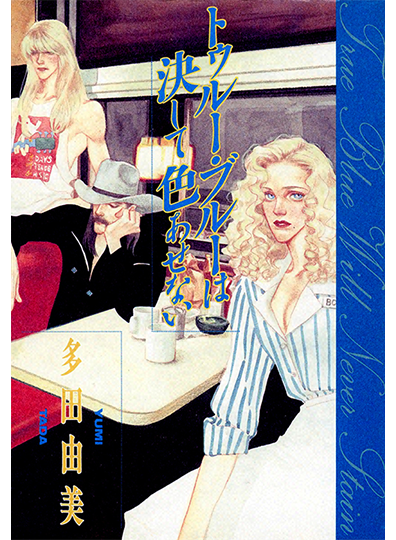
GBB: It’s neat, but also I can be a bit of a perfectionist about details so it makes it really difficult because there’s always things that can be fixed. But yeah I think for us, we get files and then we need to translate and letter it from scratch, as well as layout, edit, and design. Those are the big five, though hopefully I’m not forgetting something important. I usually will take the materials or files and create all the layouts and then have whoever is doing translation for the book work on that and then we’ll take those files and send it to the letterer.
So usually I’m not the translator or the letterer. When we first started, I was pinch-hitting roles everywhere, but now I delegate more and handle the administrative stuff. When the lettering is done, at that point, I’ll do some editing, all the design and layout work for the interior and the cover. So I mostly do the editing and design and anything administrative like the licensing, communication, and stuff like that. I’m the glue that fills in all the missing parts.
BP: Do you also do the cover design for your books yourself?
GBB: Yeah, I typically do the cover design for all our books. There’s some books like And the Strange and Funky Happenings One Day where we basically used the Japanese cover design pretty directly with some minor changes like adding flaps or changing some elements.
BP: That’s basically what I did with Slices of Life, we’re using the same cover art but Qu made the new title in English and extended the cover so it would wrap-around. I was really surprised but she does work in games and apparently she was prepared for it.
GBB: That’s so cool, that’s awesome.
BP: That’s the thing though, Glacier Bay Books has such a distinct design sensibility that I think is extremely attractive and I’ve seen how well it brings people to the table. They look like manga but also don’t look like most manga.
And that design work is getting recognized – you were nominated for the American Manga Awards for Seaside Beta.
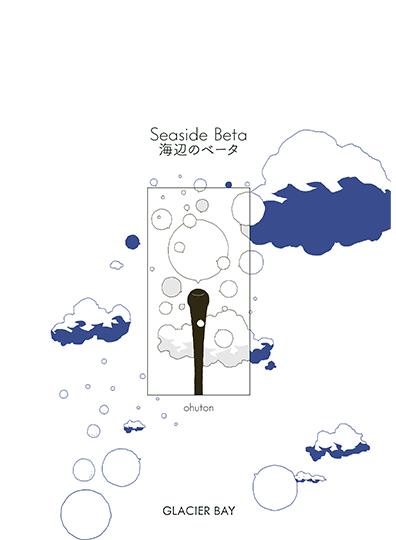
GBB: Yeah, and that’s cool because that was one of the ones where the whole cover was designed from scratch. There’s some books where we can inherit a lot of the design but other books, maybe they’ve never been published before so there’s no cover.
BP: I know what that’s like.
[both laugh]
GBB: With Seaside Beta, the author had self-published it but the cover itself was blank with the just title on, which is fine, that’s a decision.
BP: Yeah, it’s like a script cover or something.
GBB: Yeah, exactly. I thought that was fine, but I thought that maybe we can do something a bit more for our version. So I had a vision for what it might be and sent it to the artist – sometimes there’s a lot of back and forth but in this case I think they were pretty busy. It kind of ended up being a thing where I’d send them what we’ve been working on and wouldn’t hear back from them until much later but we’d be like “here’s a new version since we talked, I made some changes in the meantime, I hope you like them.”
BP: It’s interesting, I’ve basically never done the cover design for the books I publish. Since I’m basically commissioning brand-new books, the artists typically will make the cover as part of that – we’ll talk about it to make sure they have a vision for it and they always do. I will lay out the cover files for print, but I haven’t designed one yet.
GBB: Occasionally I’ll ask for something a bit more from artists but with a book like Give her Back to Me, I think Hana already had cover art in mind so I made all the various changes to make it go from a great artwork to a layout for the book; I did things with the spine and maybe extend some of the artwork and stuff. But in the end, I was just making it work.
With Mothers, that was a brand-new book that had never existed before so I asked the artist to draw a new piece of art for the cover. It was that and some other pieces of art from the book that created the cover – it was really good.
BP: Nice, I’ve been leaning more into using the comic art for the cover like with the reprint of Faster. I was really inspired by the cover design for Ping Pong and the Vertical Black Jack books, so we’re using black and white inked panels to compose the cover. It kicks ass, I love it so much.
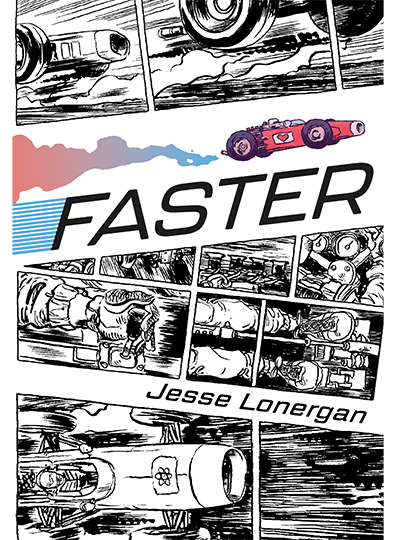
GBB: I like the Ping Pong reference. I was going to say, when I first saw it, it was kind of giving me Chip Kidd vibes with the really bold “panel-panel-panel” collage of all these different elements. It was really cool.
BP: One day I’ll complete my Black Jack collection – I’m only missing two volumes. They’re so out of print though.
GBB: Yeah those are important. I was so surprised when I saw a couple available somewhere and I realized that they keep a couple of volumes in print and easy to find, but everything after that is out of print.
BP: Super out of print! I’ve emailed Ed [Chavez] (Denpa, prev. Vertical Comics) about it when I started collecting and he didn’t even have them all which felt like a crime against him. But he’s also published so much manga, at a certain point it must be impossible to keep it all, it’s too much.
GBB: Can’t keep hold of everything, yeah.
BP: This gets into my next question a little bit. As I got started publishing, it surprised me how low the bar is to some degree until people started talking about my press in the same breath as larger indie publishers who I didn’t yet consider myself the same level as. What has been your experience for independent manga publishing compared to more established publishers?
GBB: Yeah, that’s a good question. It genuinely has been all over the place. On the one hand, like what you’re saying, it didn’t take too much for people to start seeing you as a publisher in general, but I do think there’s just a lot of barriers as a smaller publisher. Especially as one who does “weird” manga, or actually more “unusual”. I want to do some more weird stuff but “different” is probably a better word.
Getting books into stores and things like that is just a ton of like cold call-style emailing spots that never reply. Or it’s even stranger when I get a cold call email from a store that wants to stock my stuff and after I reply with info, I never hear back from them.
BP: Oh yeah, I got that a few times.
GBB: It’s uncommon to hear from stores but having that experience is not that uncommon. You know, manga has a bit of a cool caché, but our stuff is very alternative compared to mainstream stuff. And also, places that are already open to buying manga, they’re buying stuff through established distribution channels. It’s very difficult to make our stuff accessible to the places that are open to buying indie comics and are used to buying from smaller distribution models or individual publishers.
BP: What I feel you’re running up against now is that even though manga is very popular and it’s had long-term growth in the US, but a lot of that is distributors and publishers being smart about selling to established stores – teaching stores what’s popular and how to sell it. I feel like we’re still a half-generation out from people working at most comic shops knowing manga as well as they know American comics. There often isn’t that local expertise. I know of a couple shops that do have it, shoutouts to Comicopia in Boston, but one of the main reasons they’re able to focus on manga is that there’s a lot of other stores in the area that cover all of the kinds of things readers would want. They can devote 60% or more of their shelf space to manga without trouble.
GBB: Yeah.
BP: We just don’t have the expertise yet. Even if stores are comfortable buying directly from me, they might still find your catalog a challenge. It’s frustrating! You can’t really ride the manga wave on the wholesale side.
GBB: Yeah, exactly. Every bit is a challenge. There’s been lots of bright spots. Every now and then you intersect with someone with the level of expertise in a buying capacity who understands your stuff already or is able to learn it pretty quickly and understand what the concept is and why it matters.
But yeah, I would say it’s been challenging figuring out how to get books to people.
BP: The hardest part.
GBB: It’s very hard, yeah.
BP: It sometimes makes me feel like kicking myself a bit for not doing digital versions. I personally am such a bad reader of digital comics. I like them on a website like with webcomics but I’ll always forget about a PDF. I probably have, I don’t know, a hundred comics from the last few ShortBox Comics Fairs I just keep forgetting about because they’re not on my shelf.
GBB: Yeah, I put those in a folder and I learned the second time to put the word “ShortBox” in the title.
[both laugh]
GBB: I could not find some of the stuff from the first one! I think I stumbled across it by accident because I remembered someone who I knew was in it and was just looking for PDFs from them.
BP: Yeah, exactly. Getting books into stores is so hard.
GBB: This is bringing me to something I’m curious about. You work with Lunar, right? Do you work with any other distribution companies?
BP: Sort of. Lunar is the only distributor I work with that actually holds any of my stock.
GBB: Okay, yeah.
BP: They provide a catalog to shops and then ship my books to stores, paying me out after the fact. I’m technically working with two other distributors who don’t carry my stock but I haven’t seen any orders come through. Part of that is definitely me not doing enough outreach but I would hope part of a distributor’s goal is to do some outreach on their own.
So, Lunar is the only one I see any sales out of and it’s not a ton, but part of that is definitely me because I don’t have a lot of capacity for marketing, it’s just me. Stores knowing about me is fairly rare, and even then it doesn’t move the needle a ton. A good example is when The King’s Warrior came out, Lunar used the cover of the book for the cover of one of their preview catalogs. After that, there was a small boost in sales, but typically see no more than 10 orders a month for King’s Warrior, and that’s the top seller.
GBB: Yeah, okay.
BP: I do a lot more than that with direct wholesale to shops. It’s not great, but I’m happy I’m in with Lunar now. I believe they have a backlog for indie publishers and I’m lucky to have gotten in early. Also very glad I dodged Diamond completely.
GBB: Yeah, I’ve heard a lot of stuff from people about Diamond right now.
BP: Every story I’ve seen makes me go “oh that would have ended me completely, I would have thrown in the towel.” Part of that is why I’m not banking too much on Lunar. They have maybe 5% of my stock, 10% tops.
Otherwise, festivals and direct wholesale are my two biggest channels. My website sales, honestly, are kind of piddly, it just doesn’t really get a lot of traction.
GBB: Yeah, it’s a similar situation [for us]. I think I was kinda lucky early on where several titles had managed to achieve a certain level of interest, like Glaeolia 1 and Children of Mu-Town, so I didn’t realize at first how lucky I was. I think it sold a hundred copies in pre-orders in the first month. I remember thinking “wow this is great!” and I didn’t realize that those situations were exceptional. So yeah, website sales for me have generally been pretty bad, with some exceptions.
Wholesale has been up and down. I have a similar thing with Emerald Comics Distro, I’ve been working with them for a year or so now. They’re pretty easy to work with, but they’re a one-person distributor so it’s pretty small. It’s sort of like a “why not?” kind of situation. It doesn’t make a ton of money, but it’s doing better now than it did a year ago.
There was one store who was stocking specifically from the manga side instead of the indie comics side. [laughs] Until recently, there was a company called Right Stuf…you may have heard of them.
BP: Yeah…
GBB: All things told, they were a pretty solid business partner for me and they would order a nice amount of books, basically whatever came out. They’d go “all right, we want to carry some of it” and they’d place a relatively big order because they were a larger company. So they were pretty great to work with, but they got acquired by Crunchyroll and there was a lot of internal pivoting about what their focus is, so.
I think they’re still carrying manga but there’s not been any interest [in our books] going forward at this point. It’s unfortunate.
BP: That’s honestly one of the reasons why I really want to be there for festivals. I’m pretty certain that me being there is part of the draw, like me chatting with cartoonists.
GBB: It also creates awareness of your press.
BP: I’m the one who signed the book, I’m the one who worked to publish it, I’m hopefully going to be one of the most passionate people about it and help get readers interested in picking up the book and buying it. I feel like I have a responsibility to be there and see it through.
GBB: Oh yeah.
BP: What are some of the “bright spot” stores? Like the ones you’ve built direct relationships with that pretty consistently carry your work? For me, it’s Gallery Nucleus in Los Angeles which has been such a lovely surprise for me.
GBB: My bright spots recently…Sprocket is pretty solid about carrying and Next Chapter Booksellers. Graham, who works there, tries to order pretty regularly. Strand Book Store was also good early on, they ordered some books and then reordered ridiculously quickly within two months.
BP: Oh yeah, The Strand has been great for me too. I saw a post online that they were carrying Peow2 books and immediately reached out.
GBB: Oh yeah, also Phantom Comics ordered from me recently and they reordered pretty quickly.
BP: Phantom’s great!
GBB: A classic bright spot is The Beguiling. It’s not like they’ve placed a ton of orders, but every so often they’d ask “All right, what’s the new stuff? We want you to send us copies of a bunch of it.” They’re pretty great.
BP: Love The Beguiling.
GBB: Yeah, those are the big ones, I think last year there were a bunch of new orders and stuff because of all the new books that were coming out. This year it’s been kind of a mix. It’s been a little slower, but it’s still been pretty good.
I tend to gripe a lot about distribution problems and difficulty getting books into stores, but there’s a bunch of stores that are willing to buy stuff from us, so all things considered, I feel pretty lucky. I’ve had a good amount of success with stores.
BP: Okay, last question. What is your goal for Glacier Bay? Has the goal changed? If you see a shining, golden version of Glacier Bay, what does it look like to you?
GBB: This sounds really basic, but I think the shining version of the goal is for it to be completely self-sustaining as a career and income. I don’t really want to deal with getting too big, but I would like to be a bit bigger because right now there’s a bunch of books that I’m interested in working on that I just don’t really have capacity to work on. Sometimes you can put that on the backburner and try to pursue them maybe next year or something but there’s more stuff that I would like to do if I was able.
BP: Yeah, absolutely.
GBB: If it was able to be a stable job – right now it’s working okay, but there’s a lot of uncertainty. I think probably there’s more books that I want to do, sometimes I see a book and know I really want to work on it. I don’t know whether I need to be big enough to have another person working on stuff with me or I need to be big enough to set up distribution to be at the point where I’m able to make some of these deals happen for books that are hard for me to get otherwise.
I think that’s kind of my idea that I’m aspiring to is just try and slowly grow this. I don’t want to lose out on the variety of quality of what I’m putting out now. So I want to maintain what I’m doing now and be able to do a bit more books like the ones I’m doing now. It’s just that I don’t have enough manpower to do them all. And it would be nice for it to be [chuckles] a stable career…that would be really great.
BP: Yup yup.
GBB: Anyhow, right back at you? What are your aspirations? What are you hoping from Bulgilhan?
BP: It’s funny, when I launched in 2018, I had a bit of a vision for it where I wanted it to last 10 years. I really wanted to give it a shot and try for a while to see what I can build. Now that’s morphed into: “I want to do this, to at least have my toe in, until I’m dead.” I want to be like, 95, and have people still consider me a publisher.
[both laugh]
GBB: Maybe not tabling every show though.
BP: No, no, certainly not at that point. I don’t know what that looks like, though. I did not design the press to sustain me, I just sort of designed my life to sustain the press a bit. It is getting closer and closer to being self-sustaining financially, which is nice. It’s been making it’s own money and spending it’s own money, which is good to see. Successful Kickstarters have definitely helped with that to some degree. I’m not quite there yet, but almost.
It’s something where I don’t have any big aspirations for it except for certain projects because I’ve already kind of fulfilled the goal which is I get to etch my excitement of comics onto the face of the planet. I get to have true physical items in the world that represent something I love deeply and I’ve gotten to share it with hundreds, or in some cases thousands, of people and that’s really fucking awesome.
As you know, publishing is really hard and there are definitely times where I thought I could hang my hat up – I could just stop. Similar to how I want to quit my day job sometimes, I get those intrusive thoughts.
GBB: Yeah.
BP: Weirdly, I think one of my biggest strengths as a publisher is holding onto the things that I really love about it. It really does sustain me in ways that nothing else has for the length of time that it has. I mean, there are definitely bits and pieces…I wish I could have a more consistent schedule. Accidentally have 5 overlapping printing projects at the same time: not ideal.
[both laugh]
GBB: That’s a lot! Yeah…
BP: At least your’s were planned! Mine were not all planned to bump into each other like this.
I wish I could be a little more consistent, like having seasons, blah blah blah. I’m stuck in this loop since I don’t give my artists deadlines, I sort of have to roll with the punches. Sure, it’s hard, but I don’t know, I’m putting out books that I love into the world and people are responding them…I’m not sure I can ask for much more than that.
GBB: No, I think you’ve you hit on something there because when I first started publishing stuff like Glaeolia, it was like “here are all these artists I believe in that I need the world to see”. I wasn’t really expecting anything to come of it, I was kind of making this book for myself and if other people want to pick up a copy and read it too? It’s important to me that it gets out there, and that’s the nice thing about going to festivals. You meet some people who are really connected with the work and it’s like you can see the impact and feel that your artist’s work is being seen all over, it’s a really powerful feeling.
BP: It is, and I can’t think of a better place to end this!
Check out both of their ongoing Kickstarter campaigns:
Limited Palette Duo: Testament & Faster Reprint (ends Wednesday, August 27)
Glacier Bay Books Fall 2025 Program (ends Thursday, September 11)
Both Glacier Bay Books and Bulgilhan Press will be exhibiting at Short Run in Seattle, WA on Saturday 11/1, as well as at Small Press Expo in North Bethesda, MD on Saturday 9/13 – Sunday 9/14. Stop by and say hi!